Quantum Classical Hybridization : Where Quantum Fits in the Continuum
Wednesday, June 24, 2026 5:15 PM to 6:15 PM · 1 hr. (Europe/Berlin)
Hall F - 2nd Floor
Birds of a Feather
Community EngagementEmerging Computing TechnologiesIndustrial Use Cases of HPC, ML and QCIntegration of Quantum Computing and HPCSimulating Quantum Systems
Information
As quantum computing transitions from experimental research to a crucial part of 2026 industrial infrastructure, the need for quantum-classical hybrid systems is driving sector growth and making the topic a major global focus. This meeting brings together academic researchers and industry professionals to align efforts on hybrid architectures in which Quantum Processing Units (QPUs) serve as specialized accelerators within traditional High-Performance Computing (HPC) systems. While research centers focus on advancing the theoretical limits of variational algorithms and error mitigation, industry provides the real-world testing necessary for large-scale implementation. The session aims to connect "scientific possibilities" with "practical applications," ensuring that future quantum advantages are both well grounded in theory and scalable in practice. The focus will be on the practical integration of systems, moving beyond benchmarks to manage real-time heterogeneous workloads, as well as on visionary approaches such as dual-Track HPC/Quantum, including a discussion of co-designing Gate-Based and annealing solutions for scalable HPC. By combining academic advances in "warm-starting" algorithms with industry expertise in low-latency traditional cloud infrastructure and modular supercomputers (into a Continuum), participants will discuss the challenges of the convergence of HPC and QC. The goal is to develop a 2026–2030 roadmap that standardizes the hybrid software stack and highlights high-impact use cases across different project calls. This cross-sector dialogue seeks to accelerate the transition from isolated quantum experiments to integrated, value-driven solutions that expand the frontiers of modern computation.
Quantum-classical hybridization has transitioned from a theoretical concept to the standard operational framework in the quantum industry. It involves utilizing a quantum computer not as an independent device but as a specialized "accelerator" (a QPU or Quantum Processing Unit) that works alongside traditional CPUs and GPUs. This method underpins the "NISQ" (Noisy Intermediate-Scale Quantum) era, characterized by powerful yet error-prone quantum chips and short "coherence times," which determine how long a qubit can maintain its state.
Key topics include the quantum-classical continuum architecture—such as centralized quantum clouds, regional quantum fog, quantum edge, and quantum networking—and the main enablers of convergence. These encompass moving from experimental labs to integrated systems and managing quantum workflows that involve dynamic or variational processes, including classical pre-processing, quantum kernels, and classical post-processing. Challenges faced are differences between classical and quantum-classical tasks, decoherence, orchestration gaps, hybrid workflows, energy sustainability concerns, and Green Quantum-Edge workflows. The discussion also covers Quantum AI and related topics.
More information of the BoF and QC Hybridization Community: https://quantum-continuum.conf.citi-lab.fr/
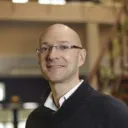
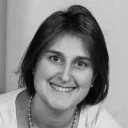
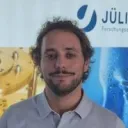
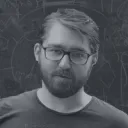
Organizers:
Quantum-classical hybridization has transitioned from a theoretical concept to the standard operational framework in the quantum industry. It involves utilizing a quantum computer not as an independent device but as a specialized "accelerator" (a QPU or Quantum Processing Unit) that works alongside traditional CPUs and GPUs. This method underpins the "NISQ" (Noisy Intermediate-Scale Quantum) era, characterized by powerful yet error-prone quantum chips and short "coherence times," which determine how long a qubit can maintain its state.
Key topics include the quantum-classical continuum architecture—such as centralized quantum clouds, regional quantum fog, quantum edge, and quantum networking—and the main enablers of convergence. These encompass moving from experimental labs to integrated systems and managing quantum workflows that involve dynamic or variational processes, including classical pre-processing, quantum kernels, and classical post-processing. Challenges faced are differences between classical and quantum-classical tasks, decoherence, orchestration gaps, hybrid workflows, energy sustainability concerns, and Green Quantum-Edge workflows. The discussion also covers Quantum AI and related topics.
More information of the BoF and QC Hybridization Community: https://quantum-continuum.conf.citi-lab.fr/
Organizers:
Format
on-site
Targeted Audience
Seeking both researchers and productive-sector actors to ensure a balanced hybrid discussion.
BoF Format
Birds of a Feather Meet-up