
#hacktheworldabetterplace - Why it Still Matters to Inspire Our Youth to Code
Wednesday, June 24, 2026 2:30 PM to 3:00 PM · 30 min. (Europe/Berlin)
Hall H, Community Stage - Ground floor
Community Meet-up
Community EngagementDevelopment of HPC SkillsDiversity and InclusionEducation and Training
Information
What does a grassroots coding initiative have to do with high performance computing? More than you might think. This talk brings together two perspectives rarely heard on the same stage: the world of HPC research and industry, and the front lines of youth coding education — making the case that the future of our field depends on who we inspire today.
The challenge is urgent and underappreciated. We are living through a civilizational shift driven by high performance computing. The problems being tackled with HPC systems today — climate modelling, drug discovery, AI at scale, financial infrastructure — will define the world our children inherit. Yet the pipeline feeding into these fields is dangerously narrow. Too few young people are developing the coding literacy needed to contribute, and girls and socio-economically disadvantaged youth remain dramatically underrepresented. This is not a talent gap — it is a structural one. And if we do not address it now, the HPC community risks building an increasingly powerful technological future in an increasingly small room.
This is the challenge the Hacker School has taken on. Founded as a non-profit organisation and led since 2017 by Dr. Julia Freudenberg, the Hacker School delivers hands-on coding courses directly in schools across Germany, in partnership with companies and universities. The model is deliberately designed to reach those who would never find their way into tech through traditional pathways — removing barriers of cost, geography, and social background. A particular focus is placed on inspiring girls, not as a side project, but as a core strategic priority. Because the AI systems and HPC applications being built today carry the perspectives of those who build them. Without diverse voices in the room, we do not just miss out on talent — we build bias into the foundations of our most powerful technologies.
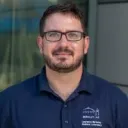
Jana Dehne, Team Lead Operations at the Hacker School and speaker of this talk, will bring the audience into the real world of youth coding education — what works, what does not, and what it actually takes to move the needle at scale. The session will be interactive: attendees will be invited to reflect on their own entry into tech, share where they see the biggest gaps in their organisations and communities, and explore concrete ways the HPC community can act as a partner, sponsor, or advocate for initiatives like the Hacker School.
The key insight we want every attendee to walk away with is this: in the age of high performance computing, coding literacy is not optional — it is a prerequisite for participation in the most important decisions of our time. And inspiration is not a soft topic. It is infrastructure. The young person who does not get a chance to write their first line of code today is the missing voice in your research team, your engineering department, or your ethics board tomorrow.
The computers are getting faster. The question is: who gets to decide what they do — and are we doing enough to make sure the answer is "everyone"?
The challenge is urgent and underappreciated. We are living through a civilizational shift driven by high performance computing. The problems being tackled with HPC systems today — climate modelling, drug discovery, AI at scale, financial infrastructure — will define the world our children inherit. Yet the pipeline feeding into these fields is dangerously narrow. Too few young people are developing the coding literacy needed to contribute, and girls and socio-economically disadvantaged youth remain dramatically underrepresented. This is not a talent gap — it is a structural one. And if we do not address it now, the HPC community risks building an increasingly powerful technological future in an increasingly small room.
This is the challenge the Hacker School has taken on. Founded as a non-profit organisation and led since 2017 by Dr. Julia Freudenberg, the Hacker School delivers hands-on coding courses directly in schools across Germany, in partnership with companies and universities. The model is deliberately designed to reach those who would never find their way into tech through traditional pathways — removing barriers of cost, geography, and social background. A particular focus is placed on inspiring girls, not as a side project, but as a core strategic priority. Because the AI systems and HPC applications being built today carry the perspectives of those who build them. Without diverse voices in the room, we do not just miss out on talent — we build bias into the foundations of our most powerful technologies.
Jana Dehne, Team Lead Operations at the Hacker School and speaker of this talk, will bring the audience into the real world of youth coding education — what works, what does not, and what it actually takes to move the needle at scale. The session will be interactive: attendees will be invited to reflect on their own entry into tech, share where they see the biggest gaps in their organisations and communities, and explore concrete ways the HPC community can act as a partner, sponsor, or advocate for initiatives like the Hacker School.
The key insight we want every attendee to walk away with is this: in the age of high performance computing, coding literacy is not optional — it is a prerequisite for participation in the most important decisions of our time. And inspiration is not a soft topic. It is infrastructure. The young person who does not get a chance to write their first line of code today is the missing voice in your research team, your engineering department, or your ethics board tomorrow.
The computers are getting faster. The question is: who gets to decide what they do — and are we doing enough to make sure the answer is "everyone"?
Format
on-site