Quantum Computing and the Future of the Technical Workforce: A Cross-Sector Birds-of-a-Feather Session
Thursday, June 25, 2026 4:00 PM to 5:00 PM · 1 hr. (Europe/Berlin)
Hall F - 2nd Floor
Birds of a Feather
Development of HPC SkillsEducation and TrainingEmerging Computing TechnologiesIntegration of Quantum Computing and HPCQuantum Program Development and Optimization
Information
Academic research centers in the U.S. and Europe have been focused on how best to optimize artificial intelligence and machine learning workflows on supercomputers with an abundance of GPUs. Their systems have enabled extraordinary advances in data-driven science, with breakthroughs in all domains. Universities have built curricula, training pipelines, and research programs around these architectures, and a generation of students has emerged fluent in parallel computing, deep learning frameworks, and data-intensive workflows. While quantum simulation and methodologies are taught in most computer science curricula, few have acquired actual quantum systems. Hosting quantum systems also presents a challenge as they may require extreme cold temperatures or other provisions that are not commonly available to universities. To prepare the shared workforce, academia needs greater access to systems, expertise, and curated educational content.
Industries and many government laboratories are moving forward with quantum algorithms for machine-assisted mathematical reasoning, for example, with applications for defense, energy, and more. While considerable government and industry funding is spent on development in this sector, tech companies are slow to release affordable quantum computing solutions since there is a smaller market for them.
In contrast, although quantum computing theory, quantum simulation, and quantum information science are now widely taught in physics, computer science, and engineering programs, relatively few academic institutions have been able to acquire or directly operate quantum hardware. Instead, access is often limited to small experimental systems, remote cloud-based platforms, or purely theoretical models. As a result, there is a growing gap between conceptual education in quantum methods and hands-on experience with real quantum devices, programming environments, hybrid quantum-classical workflows, and operational constraints such as noise, decoherence, error mitigation, and hardware heterogeneity.
At the same time, industrial innovators and government laboratories are exploring and developing quantum algorithms and applications that go well beyond academic proofs-of-concept in all domains of national and economic importance. These include machine-assisted mathematical reasoning, combinatorial optimization, cryptography and cryptanalysis, quantum chemistry and materials modeling, sensing and metrology, and secure quantum communications.
While governments are investing heavily in these initiatives, funding basic research, hardware development, and pilot programs, the commercial ecosystem remains immature. Technology companies are cautious about releasing affordable, scalable quantum computing solutions, given the high cost of development, the fragility of current hardware, and the still-emerging market for quantum-enabled services. As a result, quantum remains perceived by many as a distant or speculative technology, rather than as a field that already requires workforce preparation, infrastructure planning, and cross-sector coordination.
This Birds-of-a-Feather (BoF) session is designed to address these gaps by bringing together stakeholders from academia, government, and industry to explore how the global quantum workforce can be developed in a coordinated, inclusive, and technically grounded way. We will provide a forum for BoF participants to share perspectives, challenges, and best practices related to education, training, infrastructure, standards, and transition pathways — with the goal of accelerating responsible innovation and ensuring that quantum technologies are integrated into society in ways that are secure, equitable, and economically beneficial.
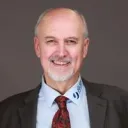
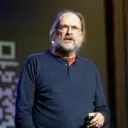
Organizers:
Industries and many government laboratories are moving forward with quantum algorithms for machine-assisted mathematical reasoning, for example, with applications for defense, energy, and more. While considerable government and industry funding is spent on development in this sector, tech companies are slow to release affordable quantum computing solutions since there is a smaller market for them.
In contrast, although quantum computing theory, quantum simulation, and quantum information science are now widely taught in physics, computer science, and engineering programs, relatively few academic institutions have been able to acquire or directly operate quantum hardware. Instead, access is often limited to small experimental systems, remote cloud-based platforms, or purely theoretical models. As a result, there is a growing gap between conceptual education in quantum methods and hands-on experience with real quantum devices, programming environments, hybrid quantum-classical workflows, and operational constraints such as noise, decoherence, error mitigation, and hardware heterogeneity.
At the same time, industrial innovators and government laboratories are exploring and developing quantum algorithms and applications that go well beyond academic proofs-of-concept in all domains of national and economic importance. These include machine-assisted mathematical reasoning, combinatorial optimization, cryptography and cryptanalysis, quantum chemistry and materials modeling, sensing and metrology, and secure quantum communications.
While governments are investing heavily in these initiatives, funding basic research, hardware development, and pilot programs, the commercial ecosystem remains immature. Technology companies are cautious about releasing affordable, scalable quantum computing solutions, given the high cost of development, the fragility of current hardware, and the still-emerging market for quantum-enabled services. As a result, quantum remains perceived by many as a distant or speculative technology, rather than as a field that already requires workforce preparation, infrastructure planning, and cross-sector coordination.
This Birds-of-a-Feather (BoF) session is designed to address these gaps by bringing together stakeholders from academia, government, and industry to explore how the global quantum workforce can be developed in a coordinated, inclusive, and technically grounded way. We will provide a forum for BoF participants to share perspectives, challenges, and best practices related to education, training, infrastructure, standards, and transition pathways — with the goal of accelerating responsible innovation and ensuring that quantum technologies are integrated into society in ways that are secure, equitable, and economically beneficial.
Organizers:

Format
on-site
Targeted Audience
Faculty and research staff working in quantum information science, computer science, physics, engineering, and related fields.
University administrators and research computing leaders planning future investments.
Government program managers, policymakers, and laboratory researchers.
Industry professionals from startups and established firms.
Educators and workforce development professionals designing training programs and curricula.
BoF Format
Birds of a Feather Roundtable Conversation
Speakers

Laura Schulz
Project Lead for InnovationArgonne National Laboratory
Elizabeth Leake
Director/Founder/Program ManagerSTEM-Trek Nonprofit, Texas A&M University
Bernd Mohr
Division Head "Application Support"Jülich Supercomputing Centre, Germany
Sean Feeney
PhD Student Quantum ComputingTexas A&M University
Bob Sorensen
Sr. VP Research; Sr. Analyst QuantumHyperion Research